No-shows are a rampant problem in the restaurant industry, costing businesses wasted time and money. Some restaurants have started to experiment with “no-show fees” charged to consumers who blow off their reservations. Others have resorted to using social media to scold people who don’t show up.
In a recent research paper, Wharton doctoral student Jaelynn Oh and operations and information management professor Xuanming Su use a game theoretic model to suggest that many restaurants could maximize profits by punishing customers who don’t show up for their reservations and rewarding those do.
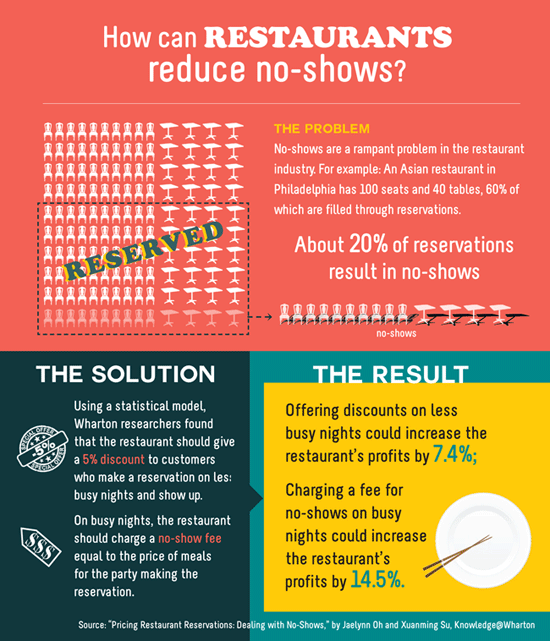
The researchers applied their model to the real-life circumstances of some Philadelphia restaurants. Here is a visual look at what they found when studying the case of an Asian eatery located in the city:
To learn more about the research, read the full article on Knowledge at Wharton.