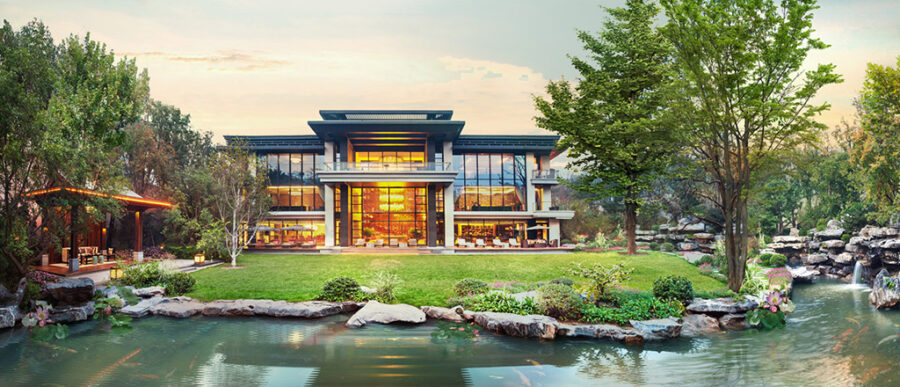
China’s real estate sector remains a significant source of economic activity, despite an economic slowdown and tightened credit conditions. Government policies have fueled this growth for decades, with residential real estate demand largely unwavering. Over time, the market has grown ever more differentiated, targeting consumers in the low-, middle-, and high-income brackets, in cities of varying sizes as well as levels of economic development. But no matter the differences, they all share one thing in common: While the new homes were modern, they were not particularly distinguishable as Chinese.
The Tahoe Group set out to do things differently. Its mission is to become a one-stop-shop for housing, finance, cultural activities, health care services and educational pursuits. Most recently, Tahoe developed a courtyard line for its real estate subsidiary, Tahoe Real Estate. Tahoe strives to create ‘Chinese-style luxury living’ by bringing together traditional Chinese architectural design with modern amenities through an urban living and diversified development strategy known as ‘Tahoe Plus (Tahoe+).’ It is a daring attempt to create differentiation in China’s unpredictable and increasingly homogenous housing market. (This report in Chinese.)