
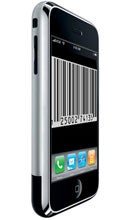
 In March, PayPal will enable its users to pay through their mobile phones, tablets or iPads at 2,000 Home Depot stores across the U.S., and by the end of the year at 20 other national retailers. Mobile payments are rapidly gaining popularity, but large scale adoption will depend on consumer perceptions of security and the pricing of such services, according to Wharton faculty.
A subsidiary of online shopping portal eBay, PayPal last year exceeded expectations with $4 billion in mobile payments volume, and the company predicts that figure will reach $7 billion in 2012, company spokesperson Anuj Nayar told Knowledge at Wharton Today. Last November, mobile payments were 538% higher on Black Friday than on the same day in 2010, according to PayPal. The firm’s latest encouragement comes from a pilot program it launched in January at 51 Home Depot stores, mostly in the San Francisco Bay area.
Mobile payments are a small fraction of the net payments of $118 billion that PayPal put through in 2011. Even so, Shawndra Hill, a Wharton professor of operations and information management, finds PayPal’s mobile initiative “exciting,” although she doesn’t think it is “a game changer just yet.” Before wide scale adoption occurs among consumers, “mobile solutions need to prove that they are as secure as paying with credit cards or cash,” she says. Also, consumers will need to trust the brands offering these services, just as “they have had a long time to learn to trust credit cards.” Further, mobile payment options need to be more convenient and possibly cheaper than other avenues, Hill adds.
According to Wharton marketing professor Barbara Kahn, pricing of mobile payments will determine their popularity, especially when conventional credit cards also move to mobile formats. “The issue from the consumer point of view will be which form of mobile payment to use, just like we now decide which type of card to use,” she says. “Right now, the end user [usually] pays list price for the item regardless of what kind of card is used; sometimes there is a cash discount, or in some countries a fee for using a credit card. I would imagine all of these pricing issues are on the table now.”
Hill suggests that mobile payment processors could expand their market opportunity by offering lower transaction fees than credit cards. Also, the requisite infrastructure and standards for money transfers have to keep pace, she notes.
PayPal’s mobile payments option is part of its recently launched PayPal Wallet, which includes a card that allows offline payments at stores. With that, “consumers will choose if they want to swipe a card, use an app or tap their phone,” says Nayar. Others in the mobile payments space include Google Wallet, which stores customer credit card information on smartphones, and so-called NFC devices that can be used for electronic payments. (The Near Field Communications Forum is a group of companies — including Nokia, Sony, Samsung and Microsoft, among others — that is developing mechanisms for payments and other services across devices.)
Mobile payments are just one of many new options consumers will see this year, according to Scott Dunlap, PayPal’s vice president of emerging opportunities. “In 2012, we will see a rise in virtual currencies and the ability to use them to pay for ‘real’ goods,” he wrote recently in the online magazine Gigaom.com. “Imagine paying for groceries at Safeway with Facebook credits or using extra frequent flyer miles for that cup of coffee at Starbucks.”