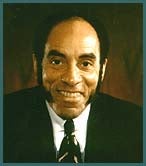
Several hours before his speech at the 28th annual Whitney M. Young, Jr. memorial conference, Earl Graves, Jr., publisher of Black Enterprise magazine, spoke with Richard Parsons, the designated CEO of AOL Time Warner. Parsons, now one of the most influential African-American executives in the U.S., has been on the cover of Black Enterprise magazine three times. In their conversation, Parsons’ “underlying theme was that Black Enterprise had created the environment that made his and other such appointments possible,” Graves said. “It was flattering to hear that. Clearly, the magazine owed much of its early success to the atmosphere of social change. But just as surely, we led dramatic social changes of our own – acting as both resource and inspiration to generations of minority business people. In other words, by adhering to socially responsible goals, we cultivated and expanded our audience, broadening our success.” Graves, who was born in Brooklyn and achieved the rank of captain in the 19th Special Forces Group, the Green Berets, has a special interest in improving the political and economic conditions in Africa. “I firmly believe that the success or failure of the 21st century rests with what happens in Africa, which is only beginning to emerge from its legacy of colonialism and exploitation,” Graves said. “The challenges are enormous: famine, civil unrest, crippling debt and an AIDS epidemic that has already wiped out a generation and decades of productivity along with it. In today’s global economy, Africa’s fate is not a remote concern.” Graves himself was an investor in a Pepsi distributorship in South Africa after apartheid was dismantled, as a way, he said, of trying to encourage economic development in that nation. In the 1990s, he controlled Pepsi-Cola of Washington, D.C. LLP, the largest minority-controlled Pepsi-Cola franchise in the U.S. In 1998, he sold the franchise back to the parent company. Graves pointed to the technology advancements around the world that are bringing great changes to society. “As with the civil rights movement before it, the technology revolution and the [Internet] are opening doors and eliminating geographic, cultural and commercial borders. Once again, the taste of change is inspiring entrepreneurs of every race to make the most of what technology and a changing economy have to offer … The flip side is that those without access to new technology are being pushed even further into society’s margins. In the U.S. and globally, whole populations are in danger of being left behind.” The source of the technology gap “rests with education, or the lack of it.” It was Graves’ fourth speech to the 28-year-old conference, organized by the African-American MBA Association at Wharton. His first appearance was in the 1970s when Black Enterprise was a four-year-old publication seeking to establish a readership with an emerging class of African-American executives and professionals. The magazine, which currently has a guaranteed monthly circulation of 435,000, is geared toward the African-American business community and covers such topics as careers, financial management, entrepreneurship and technology. Graves’ stature in the business community has grown with the circulation of his publication. Rajiv L. Gupta, chairman and CEO of Rohm & Haas Corp., attended Graves’ presentation. Graves has been a member of the pharmaceutical company’s board of directors since the 1980s and is also on the boards of DaimlerChrysler AG, AMR Corp. and Federated Department Stores. Speaking directly to the MBA students in his audience, Graves exhorted them to alter – but not cancel – career plans in the wake of the terrorist attacks. “Whatever business and financial goals you had before Sept. 11, whatever five- or ten-year plan you had in your head, you would be wise to rethink and re-strategize them. But do not abandon them. Because even though the attacks temporarily shut down the financial markets, we should not lose confidence in the business mainstream. Moreover, we should not lose confidence in ourselves, in our ability as individuals and as a collective to rebuild and recover. And we must do it without sacrificing our common humanity, our grasp of what is right and wrong.” As for the “browning” of America, Graves pointed to the latest U.S. Census figures which show that nearly half of the country’s 100 largest cities have more African-Americans, Hispanics, Asians and other minorities than whites. “Tomorrow’s business leaders,” Graves said, “will be the ones who can navigate the new American landscape in all its diversity.”



Looking for more insights?
Sign up to stay informed about our latest article releases.