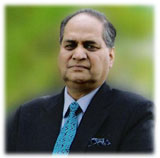
Rahul Bajaj, chairman of the Pune-based Bajaj Group of companies, India’s largest manufacturer of two- and three-wheeler vehicles, has a reputation for rarely pulling his punches. He was in Philadelphia last week to participate in the Wharton India Economic Forum and spoke with India Knowledge at Wharton on topics ranging from family-owned businesses to global warming.
According to Bajaj, if a professionally managed firm means one that is managed by those who hold no equity in the enterprise, there is “no reason to believe that a non-owner is more competent than an owner. In fact, a lot of studies done recently in the U.S. show that family-owned businesses are doing better than non-family managed companies.” What is relevant in a competitive economy is that the company has to be efficiently managed. Bajaj believes that while family-managed companies have advantages, such as commitment and continuity, one major disadvantage is that as families grow, not all family members may be equally competent. “The fingers on a hand are not the same,” he says.
In addition, Bajaj has some advice for troubled U.S. auto makers, which are locked into high costs. “If your vendors are not with you on cost and quality, you cannot succeed,” he says.
Bajaj also maintains that every large country has a responsibility not to increase global pollution. “We have to decide without getting into a self-defeating debate about the danger of global warming.” Bajaj adds that rich countries that contribute the most to pollution must step up to the plate first. “I’m sorry to say that the U.S. has set a poor example under President Bush by not signing the Kyoto Protocol,” he says. “The richer countries in the world must set an example.”
You may download or listen to the podcast using the links provided under the title of this article.