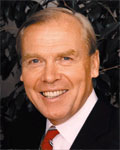
Ethics and moral codes of conduct differ in various parts of the world. Does that imply that executives who seek to do business globally should also have flexible ethical norms and traits that change from country to country? Absolutely not, if you ask Jon M. Huntsman, founder and chairman of Huntsman Corporation, a billion maker of chemicals and plastics. “Of course, situations will be different in Asia, Eastern Europe or Latin America, but individuals who are responsible for business must maintain the same standards of ethics and the same criteria of honesty and integrity,” he says. “That is very difficult because sometimes you are forced to choose whether you will invest in a country or not.” Huntsman discussed these issues and more with Knowledge at Wharton during the 2007 Wharton Economic Summit in Philadelphia last month.


Comments

New This Week

Ripple in water with Wharton School of the University of Pennsylvania logo above the text "Ripple Effect".
Podcast

How to Break Into the Workforce in an AI-Driven Job Market

April 14, 202613 min listen

Matthew Bidwell, professor of management at the Wharton School, explores how the job search process is evolving for today’s graduates and what it takes to break into the workforce.

Three workers in helmets and vests assembling large letters "AI," symbolizing the construction or development of artificial intelligence.

Generative AI Won’t Create Value on Its Own

April 13, 20269 min read

Wharton’s Rahul Kapoor explains why leaders need to think beyond the technology and focus on the strategic challenges of emergence, enablement, and embedding.

A small group, possibly a family, approaching a cozy craftsman-style house with a porch and plants.

How Homeownership Helps Build Wealth

April 13, 20265 min read

Mortgage modifications during the Great Recession helped distressed borrowers keep their homes and accumulate more capital gains wealth, a new Wharton study finds.