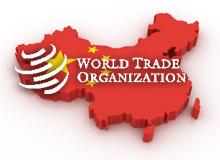
Ten years ago, when China entered the World Trade Organization (WTO), its economy accounted for less than 4% of global trade. During the past decade, China has emerged as an economic powerhouse. The country is now the world’s largest exporter and accounts for some 10% of international trade. China recently surpassed Japan to become the world’s second-largest economy. The International Monetary Fund predicts that by 2016, the Chinese economy will overtake the U.S. to become the world’s largest in terms of purchasing power parity.
At the threshold of 2012, it is helpful to look back and ask some questions: How did membership in the WTO contribute to bringing about these changes in China’s economy? How did stodgy state-owned enterprises transform themselves into globally competitive, recognized brands, such as Haier, Lenovo and BYD, among others? Which sectors of China’s economy won and which ones lost as the country developed? It is also important to ask questions about the future: What will be the implications of the change in China’s government once Xi Jinping, the presumed successor to President Hu Jintao, assumes power? What will the next decade be like for China and its companies? What will China’s continuing rise mean for the global economy and global governance?
To discuss these questions and others, Knowledge at Wharton partnered with Beijing Review magazine to produce this special report. We asked Wharton management professors Marshall Meyer and Mauro Guillen and finance professor Franklin Allen to share their insights on issues ranging from the growth strategies of Chinese multinationals to the implications of China’s efforts to globalize its currency, the renminbi. Their video interviews, with edited transcripts, appear below, as do links to Beijing Review’s articles on China and the WTO.
Download an edited transcript of this conversation as a PDF.
Download an edited transcript of this conversation as a PDF.
Download an edited transcript of this conversation as a PDF.