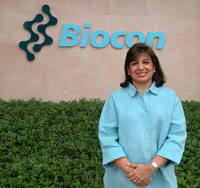
Biocon was India’s first biotech company. When Kiran Mazumdar Shaw launched it in 1978, it started out as a joint venture with an Irish biotech firm. Until the late 1990s, Biocon focused on industrial enzymes, but during the past eight years the company has changed direction. “We have transformed ourselves into an integrated bio-pharmaceutical business,” says Mazumdar Shaw. “Our key areas of focus are diabetes and oncology. We are developing oral insulin and antibodies for specific cancers.”
One of the biggest challenges Indian biotech firms have faced is raising capital. The Indian financial market is “far more risk averse than the U.S. biotech sector,” notes Mazumdar Shaw, which “forced biotech firms to focus on a revenue model based on services.” As a result, she adds, few companies dared invest in new drug development; most Indian biotech firms provided research services, clinical development and diagnostic services to keep their operations going. In that regard, “most of these companies are emulating the outsourcing model of the software services sector.” This, however, is changing. According to Mazumdar Shaw, a few firms, including Biocon, have now developed a hybrid model where a part of the company focuses on delivering services, which then enables other units to work on new discovery programs. So while funding “has been a big problem,” says Mazumdar Shaw, “we have been building a biotech sector that has managed to develop a large number of capabilities in drug development and manufacturing. Going forward, you will see a lot more companies being able to fund innovation and discovery-led programs.”
Mazumdar Shaw discussed these issues and more with Knowledge at Wharton at the recent Wharton India Economic Forum in Philadelphia.