
The massive tornado that tore through Oklahoma yesterday caused huge damage and a still-unspecified number of deaths. But there isn’t much anyone could have done to prevent the destuction, says Howard Kunreuther, co-director of Wharton’s Risk Management and Decision Processes Center.
“There is a great deal you can do with respect to hurricanes and floods, and to some extent with earthquakes, in terms of making structures safe,” says Kunreuther, co-author of several books on risk management, including At War with the Weather: Managing Large-Scale Risks in a New Era of Catastrophes. “Tornadoes are a different animal. They are powerful, but they cover a very, very narrow band. [Those in its path] are just plain unlucky.” Nor has Kunreuther read anything to suggest that the damage could have been avoided, “simply because of the power of the storms. You can talk about building stronger homes, but when that thing rips in a particular way, there is nothing you can do.”
The tornado yesterday – which touched down at 2:56 p.m. and was on the ground for 40 minutes — destroyed whole neighborhoods, at least two schools and one hospital in the suburb of Moore. As of midday today, The New York Times was reporting 24 deaths and 175 people injured. The storm was a Category 4, with winds of at least 166 miles per hour, according to The Times, and President Obama has declared five Oklahoma counties to be a federal disaster area.
As devastating as this event has been, Kunreuther says that “as a general rule, tornadoes are one of the most manageable of all disasters because of their relatively narrow area, which means they don’t cause the huge amounts of damage you would get from a major earthquake, flood or hurricane.”
In addition, tornadoes are typically covered under people’s homeowner policies. “That’s because the damage is clearly caused by wind,” he says. With hurricanes, it is not so clear cut: If homeowners can show that damage from the hurricane was caused by wind, they are covered. But if the damage is water-related, it falls under a flood insurance policy. That ambiguity does not arise with respect to tornadoes, “which means homeowners will be covered, although maybe not fully depending on the deductible.” People are normally required to have homeowners insurance as a condition of getting a mortgage. 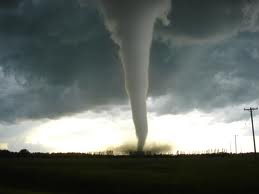
Overall, Kunreuther adds, yesterday’s tornado “will not be a major disaster for the insurance companies because the damage is relatively limited, and because there aren’t that many eggs in one basket unless it happens to be a local company that is insuring everyone.” In other words, coverage is probably spread out among different insurers, including major companies like Allstate and State Farm.


