
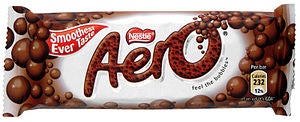
 Next time you bite into a candy bar by your favorite chocolate manufacturer, you might be surprised to find bubbles. According to a report in Bloomberg Businessweek, candy makers including Nestlé, Cadbury and Barry Callebaut (which makes chocolate and candy fillings for other brands) are adding air to some of their newest offerings in an attempt to offset rising cocoa prices. Others are adding vegetable oil or decreasing the weight of their products.
The cost of cocoa, along with other commodities, has risen dramatically over the past few years. According to Bloomberg, cocoa prices are the highest they have been in 30 years, and sugar prices are nearing top prices reached in 1989. The reasons for these increases vary: In the case of cocoa, recent election disputes and a threat of civil war in Cote d’Ivoire — the world’s largest cocoa exporter — have spooked commodity markets; in the case of sugar, a poor growing season in Brazil is to blame.
When facing long-term commodity price changes, the choices are limited for manufacturers, according to Clare Dus, vice president of innovation and technical development at New Providence, N.J.-based Sensory Spectrum, a consulting firm that works with food manufacturers and other clients on product evaluation. Companies can decrease portion sizes, increase prices or change formulations — or a combination of those options, she notes. “As you might guess, this is tricky territory as companies will not want to alienate their consumers. A change in formulation involves testing at many levels to ensure that either consumers cannot perceive a difference, or that the liking of that product is similar or better,” she says. In fact, changing recipes or formulas is a process normally undertaken years before the altered products are launched, Dus adds.
According to Wharton marketing professor Barbara Kahn, consumer alienation may not hinge so much on changes in taste — although she does note that altered taste could certainly “undermine brand equity by not delivering a consistent product experience.” Instead, she says, the real potential downside is losing consumer trust. Taco Bell, for example, just faced a backlash following a lawsuit over the fact that its ground taco meat is not exactly “meat” — it’s a combination of beef and so-called “extenders” like water, oats, cornstarch, silicon dioxide and other additives. What would happen if consumers were someday to discover that there’s not very much chocolate in their chocolate? In general, “people feel it’s immoral” to misrepresent what a product contains, Kahn notes.
Even when there is no misrepresentation (and in fact, Nestlé’s Aero bar and others like it play up the fact that they are aerated), making changes in a well-loved existing product can be challenging for any company — especially in the age of social networking, as chocolate manufacturer Lindt recently found out after altering the recipe for its 70% cocoa “Excellence” bar. (The company’s website claims the change in the bar’s formula — which still contains 70% cocoa — is “based on consumer research results that show the new recipe is preferred due to [a] smoother, less bitter taste.”) Numerous food forums have been filled with complaints by unhappy chocolate fanatics seeking to purchase the remaining old-recipe bars, and Amazon’s consumer review section is full of commentary on the change. Naturally, there is also a “Bring back Lindt’s 70 percent original recipe” Facebook page for those who would prefer a bona fide social networking experience while airing their chocolate frustrations.


