Wharton is pleased to welcome 13 new faculty members this year. Coming from all over the world, they bring a wide range of expertise — from microeconomics to AI efficiency to distributive justice.
“Our new faculty members bring an impressive range of expertise and perspectives to the School,” said Wharton Deputy Dean Nancy Rothbard. “The caliber of their work and their broad experiences will enrich our classrooms and strengthen the innovative research that defines Wharton. We’re delighted to welcome them to our community.”
One new faculty member is a familiar face. Patrick T. Harker, who served as Wharton’s dean from 2000 to 2007, has returned to campus as the Rowan Distinguished Professor and a professor of operations, information and decisions.
Harker earned his bachelor’s degree, two master’s degrees, and a doctorate from Penn before joining the faculty in 1984. He chaired the Operations, Information and Decisions Department before being named dean in 2000, then left in 2007 to become president of the University of Delaware. In 2015, he accepted the job as president and CEO of the Reserve Bank of Philadelphia. He spent 10 years there, participating on the Federal Open Market Committee, which formulates the nation’s monetary policy. He also helped oversee the Reserve’s critical IT structure. Harker said that experience allowed him to use the techniques he had been researching for years.
“Being here on the faculty of the Wharton School was clearly a defining moment. This is where I grew up as an academic. This is where I grew up as a leader,” he said. “I was able to take those lessons I learned after decades here on the faculty at Wharton and use them to serve the nation.”
In his latest engagement with Wharton, Harker is teaching a new class on financial services, management, and technology. He’s also lending his expertise to Penn Washington, which helps create fact-based policy solutions for federal, state, and local governments.
“We need to come up with practical solutions to solve the serious issues we’re facing as a country,” he said.
Learn more about the School’s other new faculty members below.
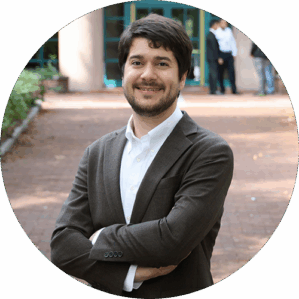 Enric Boix-Adsera: Clearer, Smarter, Faster AI
Learn More About Enric
Enric Boix-Adsera is an assistant professor of statistics and data science. His parents are originally from Barcelona, and he grew up mostly in Princeton, New Jersey. Before coming to Wharton, he earned a doctorate in electrical engineering and computer science from MIT.
Boix-Adsera studies the learning processes of artificial intelligence models, such as ChatGPT, with the goal of improving their efficiency and reliability.
“Even shaving off just 10% of the computational costs in training and running a model can yield billions of dollars in savings because of the scale of investment in data centers,” he said.
Boix-Adsera studied math as an undergraduate, and in graduate school he became intrigued with scientific questions surrounding large language models and how to understand and improve them. He described his current project as “modeling your model,” which involves mapping the internals of trained LLMs, enabling users to compress them and control them.
Boix-Adsera is also developing an undergraduate course on the foundations of how LLMs work, including AI safeguards and reliability enhancements, which are crucial for business applications.
“The goal will be for students who take the course to get a strong conceptual understanding of how AI works,” he said. “It’s hard to find resources that explain what’s going on in AI at a useful level of precision. The goal is to have this course available as a resource. Students should be able to walk away with an understanding of what AI can and cannot do for potential applications in business and other domains.”
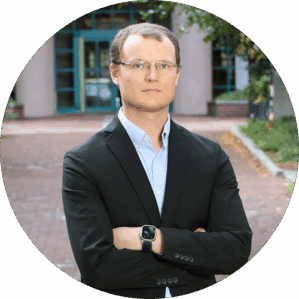 Paul Forrester: Distributive Justice and Political Philosophy
Learn More About Paul
Paul Forrester is an assistant professor of legal studies and business ethics. He’s from North Carolina, where he earned a bachelor’s degree in philosophy and political science from Duke University. He also earned a PhD in philosophy from Yale University before joining the Wharton faculty.
Forrester studies distributive justice, which he defines as the allocation of assets and opportunities across different members of society. He’s currently examining property rights and taxation.
“I wanted to research this topic because it’s really a pervasive set of issues that structure the entire economy,” he said, adding that he hopes his line of work will help generate solutions for housing affordability.
Forrester said he’s excited about joining the intellectual community at Wharton and collaborating on new ideas.
“Hopefully the defining moment of my career will be in the future, but getting a job at Wharton is a pretty nice start,” he said.
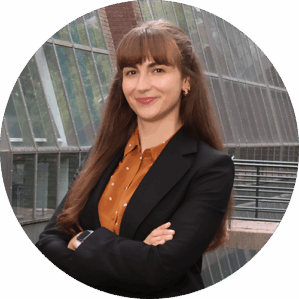 Sophie Gibert: The Ethics of Influencing Behavior
Learn More About Sophie
Sophie Gibert is an assistant professor of legal studies and business ethics with a secondary appointment in the Philosophy Department. She grew up in Boulder, Colorado, and received her doctorate in philosophy from MIT in 2024. Before graduate school, she was a fellow in the Clinical Center Department of Bioethics at the National Institutes of Health.
Gibert’s research focuses on the ethics of influencing people’s behavior, including actions such as manipulation, coercion, blackmail, and deception. She became interested in these topics during her time at NIH while writing about behavioral nudges — modes of influence that use insights from psychology to change people’s behavior, rather than incentives, taxes, or bans. An example would be an opt-out organ donation system.
“Back when I was writing about this, critics were worried that these policies were not only wrongfully paternalistic, but also manipulative,” Gibert said. “I became interested in whether that was true and, more generally, what we can and can’t do to influence people’s behavior.”
She said nudges and other forms of influence show up in nearly every facet of life, including government policies, workplace negotiations, and marketing and ad campaigns.
“A lot of things that we do influence other people, and they do so in predictable ways. We have to be constantly navigating how far we can go, and what kinds of means we can use to get other people to do things,” she said.
She’s currently finishing a project on ethics of paternalism, which is the restriction of someone’s decision-making autonomy based on the belief that it’s for their own good.
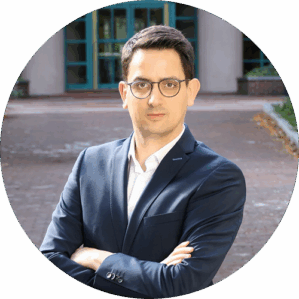 Stefan Huber: Connecting Accounting Standards to Corporate Decision-Making
Learn More About Stefan
Stefan Huber is an assistant professor of accounting. He grew up near Munich, Germany, earned his doctorate at Stanford University in California, and was on the faculty at Rice University in Texas before joining Wharton.
Huber’s research examines how accounting standards influence firms’ real decisions, particularly their investment choices. He chose to study accounting standards because they are key indicators of economic performance.
“What gets measured gets managed, and we all try to beat our targets,” he said.
In one recent study, Huber examined how the accounting treatment of goodwill shapes M&A valuations. His current research focuses on intangible assets, such as data, technology, and brands.
“My research explores how their accounting treatment shapes companies’ investments in these opportunities,” he said.
 Ying Jin: Solving Problems With Statistics
Learn More About Ying
Ying Jin is an assistant professor of statistics and data science. Hailing from Suzhou in Eastern China, she moved to the U.S. to earn her doctorate in statistics from Stanford University.
Jin specializes in using statistical methods to eliminate uncertainty, especially with AI models. Her research helps decision-makers find solutions to dynamic problems by giving them a better understanding of how the components are changing. Her work directly applies to medical and drug discoveries that are advanced by AI models.
“[Drugmakers] have been training very fascinating AI models to make predictions. But AI models are so black box, they are too complex,” she said. “They always have errors. How can we have confidence in what we are going to experimentally validate?” Her research helps drugmakers determine what is really possible, she added.
Jin said she began her academic career studying “pure math” but expanded to statistics when she discovered how it can help solve some of the most vexing problems.
“When I got started in the stats PhD program, I realized it is a domain that’s very connected to real life,” she said. “That was a defining moment.”
 Rongchen Li: Information Flows in Capital Markets
Learn More About Rongchen
Rongchen Li is an assistant professor of accounting. Born and raised in Beijing, he earned his doctorate from Columbia Business School earlier this year before joining the faculty at Wharton.
Li specializes in the measurement, production, and communication of information in capital markets.
“We’re living in a world where the information environment for corporations is changing rapidly,” he said. “Regulators are demanding greater transparency from firms, asking them to share more. Meanwhile, a new wave of alternative data providers is emerging, enabled by new technologies and machine learning. How do we navigate through these changes?”
His recent work examines the selection bias potentially faced by third-party vendors of corporate emissions data. “When greener firms disclose more, the disclosed emissions data would not be representative of those remaining silent,” he said. “And if a firm realizes that some reputable third party has estimated their emissions to be lower than the actual, they might see disclosure as an even less favorable choice.
“One of the defining moments in my career is the turning point when I realized that our job is really to ask big questions, not to answer easy questions,” Li said.
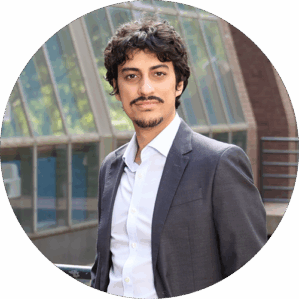 Victor Orestes: Monetary Policy and the Economy
Learn More About Victor
Victor Orestes is an assistant professor of finance. Originally from São Paolo, Brazil, he came to Philadelphia from Boston, where he earned his PhD in economics and statistics at MIT.
Orestes studies how monetary policy shows up in the real world, including how it affects inflation, GDP, employment, and firm decisions. He uses a combination of statistical and econometric techniques to parse big data, looking for answers that help bridge theory and practice.
One recent project examined central bank collateral management. Specifically, he wanted to determine whether central banks accepting more corporate bonds as collateral would affect the hiring or investing of the firms that are putting up the corporate debt.
“I show that these firms actually have a direct, real impact on the supply chain. Why? This makes firms more confident in their ability to raise [money], and they don’t need to save a lot. They can spend more on productive activities versus trying to insure themselves against potential risks,” Orestes said.
He’s currently studying the optimal design of carbon credits markets in emerging economies, particularly in Brazil. The goal is to help design markets that maximize investments in the green economy.
Orestes said he’s most excited about “all the future ideas and projects that haven’t even started yet. I don’t even know what will come up in the next few years, but I think it will be great.”
 Erik Santoro: Building Bridges Through Conversation
Learn More About Erik
Erik Santoro is an assistant professor of operations, information and decisions. He grew up in Connecticut and earned a PhD in social psychology from Stanford University before working as a postdoc scholar at Columbia Business School.
Santoro studies how conversations can bridge divides, both in the workplace and in society at large.
“Some recent work I’ve done has looked at the role of listening on persuasion between people who disagree with one another,” he said. “I’ve also done work on bringing people from different political parties together to have conversations and looking at the effects on how they think about the other side.”
Santoro traces his interest in studying conversations to his undergraduate years when he participated in group discussions about life’s big questions. Then, in graduate school, the introduction of new methods to analyze conversations at scale ignited his study of difficult conversations.
“All of us are probably having difficult conversations, whether that’s with a co-worker who has a different perspective than us, or with a friend or relative who we have a political disagreement with,” he said. “I really see my research as a way to understand these dynamics and figure out tools and mindsets to help these moments become a bit more collaborative and productive.”
In past work, Santoro showed that the positive effects of conversations between Democrats and Republicans tend to decay over time. Santoro is currently excited to study how to structure these conversations to create longer-lasting positive outcomes.
 Parinitha (Pari) Sastry: Climate Change, Housing, and Insurance Markets
Learn More About Parinitha
Parinitha Sastry is an assistant professor of finance with a secondary appointment in the Wharton Real Estate Department. She grew up in the New York-New Jersey area and earned her doctorate from MIT. She spent two years as an assistant professor of finance at Columbia Business School before coming to Wharton.
Sastry studies the effect of climate change on financial markets, trying to understand how banks and insurance companies manage and price these risks. Those decisions affect the broader economy, including where people choose to live and how they invest. She said her research focus was motivated by Hurricane Harvey, a category 4 storm that made landfall in Texas and caused more than $1.25 billion in damage. Sastry was working on her PhD when Harvey hit in 2017.
“It kind of came as a surprise and was one of the first times that people started to feel like physical risks from climate change were intensifying faster than expected,” she said. “It was just so big, so important, so understudied, and I felt like there were so many questions I wanted to understand about that event.”
Sastry is currently studying the regulation of homeowners insurance companies. One of her recent papers revealed that a ratings agency was giving inflated “financial strength” ratings to Florida insurance companies, with many of them going insolvent after large hurricanes. Her paper was cited by the U.S. Senate.
“This research was pretty consequential because it meant that Fannie Mae and Freddie Mac, which are owned by the taxpayer, were potentially not screening insurance companies the way they should be,” Sastry said.
Sastry will teach a course called “Climate Risks and Opportunities,” with one section for undergrads and another for MBA students. The class will cover how businesses manage climate-related risks and how their investments influence climate change.
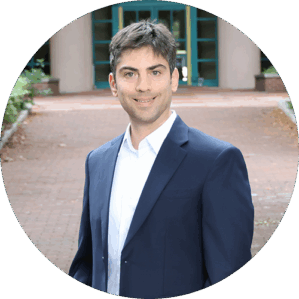 Gal Smitizsky: Judgment and Decision-Making
Learn More About Gal
Gal Smitizsky is an assistant professor of operations, information and decisions. He’s originally from Israel and moved to Philadelphia after completing his doctorate at the University of California San Diego’s Rady School of Management.
Smitizsky studies judgment and decision-making, with a particular focus on the ways people think about and value time versus money. For example, he said, people usually have a set price they are willing to pay for a latte from their favorite coffee shop, but the amount of time they are willing to wait for a free cup varies depending on the context — for instance, whether it’s their favorite café or if they’re especially thirsty or craving caffeine. His dissertation is titled “How Context and Framing Shape Time and Money Valuation.”
“I’m working on understanding how people make trade-offs between spending time and spending money,” Smitizsky said. “What I noticed was that when people decide the maximum amount of time they’re willing to spend on a task to avoid paying money, they tend to act as if their time is worth more than it actually is, compared to when they make a direct choice between the two.”
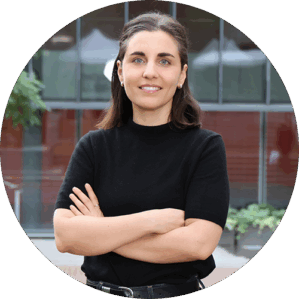 Maren Vairo: Microeconomic Theory and Mechanism Design
Learn More About Maren
Maren Vairo is an assistant professor of business economics and public policy. A native of Uruguay, she came to the United States to pursue her PhD in economics at Northwestern University, followed by a yearlong postdoctoral fellowship at Princeton University.
Vairo’s research focuses on microeconomic theory and mechanism design. Mechanism design is a branch of economics that studies how to design systems or rules — such as auctions, tax policies, or matching programs — so that when people act in their own self-interest, the resulting outcomes still promote broader social goals. She was inspired to study the topic during graduate school, where many of her conversations with faculty centered on the difficulty of reconciling rigorous economic modeling with real-world problems.
“I’ve been always very interested in the gap between more formal economic models and the chaos that is actually designing policies,” she said. “I’m interested in bridging that gap, thinking formally about how one might design policies in very complex situations.”
For her dissertation, she studied how governments can design redistributive income tax systems that remain effective even when policymakers have limited information about individuals’ behavior and preferences. Vairo is currently studying the political economy of health care reform, specifically how policies are designed when they are chosen by election-seeking politicians.
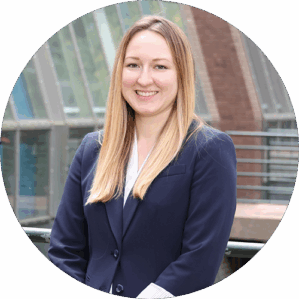 Courtney Wiegand: Fiscal Policies and Market Response
Learn More About Courtney
Courtney Wiegand is an assistant professor of finance. She grew up in Washington, D.C., before moving to New York City to pursue her doctorate degree in finance at the NYU Stern School of Business.
Wiegand studies how financial markets respond to fiscal and monetary policy, with a specific focus on asset pricing. She was inspired to pursue her line of research during a college internship with the House Budget Committee, where she gained firsthand experience in the congressional budgeting process. After college, she spent two years as a research assistant at the Federal Reserve Board, learning about financial markets and asset pricing.
“This combination of both monetary policy and finance, as well as my fiscal policy experience, naturally led me to want to study the intersection of these two things,” Wiegand said.
For her dissertation, she studied the budget resolution and reconciliation process in Congress and measured the shock effect from news that investors received in real time. “I used these deficit news shocks to study the market reaction to them, both in bonds as well as in equities.”