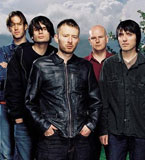
Radiohead, the British rock band, sent shock waves through the music industry recently when it announced that it would release its latest album online, without a record label, and let fans pay whatever they wanted to for it — including nothing at all. For Radiohead, this means that the group doesn’t have to pay recording, marketing or overhead costs and it gets to keep the entire price of each album sold, not just a small fraction of it. But what does this mean for the industry in general? As one AP reporter put it: “Depending on what side of the digital divide you sit, this action can mean one of two things, the end of the music business as we know it, or the dawn of the music business’s second life.” Knowledge at Wharton asked Wharton marketing professor Peter Fader and Don Huesman, senior director of information technology at Wharton, for their reactions to Radiohead’s move. An edited transcript follows the video.
This interview may also be viewed at Google Video.
Knowledge at Wharton: First question: Is this a good idea?
Fader: I think that any idea that is new and different is a good idea. What the industry needs right now is to let 1,000 flowers bloom, try different kinds of business models and see what works, see what doesn’t, in terms of customers being happy. This is not something that is going to happen repeatedly.
This is a big name band that has a built-in following. You’re not going to see this kind of thing happening with lots of little independent artists. In fact, you are seeing it with lots of independent artists and it’s not really working well. The labels still have a real place to be the taste makers — to tell us what we need to listen to. And, despite what people say about the quality of music today, I think they do a pretty good job at that.
Huesman: Yes, to reiterate what Pete was saying, I think that this is more of a performance art piece by Radiohead, rather than a new business model. They are coming off a lucrative deal with EMI and they’re a Grammy winning band. What they have done is they have taken this discussion that is happening among the titans of the music industry and decided to have the conversation instead on a more intimate level with their fan base.
They are saying to the fans: “Why don’t you decide what the real value of our music is? Pick your price. Is MP3 good enough? If so, go that route. If not, spend the $80 in the U.S. and buy the fancier boxed set with the vinyl LPs and all of that.” So, I see this as a brilliant piece of performance art on their part.
Knowledge at Wharton: So neither of you think that more popular musicians — with wider fan bases, who have more to lose by sticking with their music contracts — will follow in their footsteps?
Fader: Well, they might. The big guys might. They can go off on their own. There was the announcement just this week about Madonna leaving Warner. They have the power to do that. But these artists represent a rather small slice of the industry as a whole. What matters more is what is happening with the ‘grass roots’ — and I don’t mean the band. That way we will still see the labels deciding who is really good.
The way that albums or songs get distributed — that’s going to continue to change. In fact, one of the concerns I have here is just that: the distinction between albums and songs. As Don said, part of the Radiohead deal is to release the album for whatever you want and then pay for the big expensive box set later on.
If you compare that to other industries, it’s completely backwards. Usually you pay more. The early adopters are willing to pay more for the premium version and then the mass market comes in and gets the cheaper [version] later on. That’s the right model for the music industry. If this particular model gets adopted, that could be tragic for the industry as a whole.
Huesman: I’m still thinking that this model is primarily an experiment that’s mostly intended for artistic impact. I would suspect that in the longer run, the real issue is that we are seeing the industry shift from the CD era, which was dominated most recently by four players, to the digital era, where it’s being dominated by one player. About 75% of the legal distribution of digital media is now controlled by Apple.
That’s a little scary, and in that regard, I see the artist as being a player who doesn’t really have a seat at the negotiating table. That’s my biggest concern. I’m less worried about who’s making the money from the distribution. I’m also not worried about the big name stars because most of their money is made from side benefits to the popularity of their CD sales. So I’m not worried about the big players, but I am worried about the little ones.
Knowledge at Wharton: One of the band members said that the whole reason for this was that “It’s fun to make people stop for a few seconds and think about what music is worth.” Is this a realistic assessment of what’s going through consumers minds when they decide how much to pay for this?
Huesman: Ithink that’s what the artist would like. I don’t know if you heard Bruce Springsteen on 60 Minutes the other night. He made a very convincing case that Rock-n-Roll can change the world and maybe do some things for the better. He’s got me believing him. So I’m thinking now that music is not just a private good as the economists would say, but also probably a public good.
It’s nice to get our minds around the notion as we move into a new era of how we can preserve that value … of what music has meant for society. In the educational sphere we have had an effort to do this [program] called “No Child Left Behind.” I wonder if there isn’t a corollary — “No Artist Left Behind” — and whether we should be thinking about or worrying about it.
Fader: One of my concerns with the whole new gimmick by Radiohead is that it will commoditize the music. If you boil it down to what is this song worth — you don’t people to be thinking about that. This is one of the problems with the whole iTunes business model, i.e., is it worth 99¢ or not? Music, being a holistic good and an experiential good, is worth more than just the bits that you are acquiring. One of the things that the industry has failed to do is to really create that sense of overall value and find ways to get people to really pay for it.
The movie industry for instance: If you look at all the goodies that they pack in with the DVD, you’re doing more than just paying for the movie. You’re paying for all of these extra goods. You’re paying for the right to have this “special box” on your shelf along with other movies that you deem worthy. The music industry has moved away from that, which is unfortunate because I think they have just as much potential, if not more, to encourage people to add to their collection and do more than just figure out what this song is worth.
Knowledge at Wharton: That said, do you think that it would be a better model to just charge a minimal price for whatever the distribution costs are, rather than just saying “pick your price”?
Fader: I think that you have to make the distinction between songs and albums. I think that the key to the industry is to give away songs for free — maybe pay people to take the songs — flip it around completely the other way. They should get songs out as broadly as possible and then create and extract value from albums.
One of the ironies of this is that Radiohead tends to be one of the more album oriented bands. They tend to be more than just a collection of songs. And here they’re cheapening the whole thing by just saying that it’s just a bunch of songs. In the old days, you had concept albums, and even today, I’m thinking about an album like American Idiot by Green Day. It’s a great album and much more than just a collection of songs. If you give the songs away, people will want to buy the album.
Huesman: Some of this too, I think is a reaction to the battle between the old media players and Apple. NBC, for instance, didn’t like about their agreement to distribute television programming through iTunes. It wasn’t just the pricing, which was irritating enough — i.e., the fact that you have one guy telling you what the price is. But in addition to that, there was the issue of bundling different video components that they wanted to do. They were losing control of the product, too.
I think that to some extent, too, as artists go their own way and try to cut out the traditional distributors, one of the things they are trying to do is get some kind control back over what the product is, in its essence. I think that’s entirely legitimate. I think, as I said before, that Radiohead is just trying to experiment with it and just raise the issue as much as propose a particular new business model.
As for myself, we have talked before, and I’m one of the last people on the planet who’s still a fan of a light version of DRM — which I think is an interim solution to this problem. Ultimately, and I think that Pete and I agree on this, the real solution in the longer run would be some kind of fee-based streaming service for all of our digital belongings.
Knowledge at Wharton: Pete, you mentioned in an earlier conversation that you thought that Amazon’s recent announcement that it would start selling songs digitally was also a bad idea. Why are you against Amazon’s move?
Fader: Again,on one hand it’s a good idea just to see new players trying new things. But what it does is it legitimizes the iTunes Music Store. It says that it’s good to sell songs on an a la carte basis and all of that. And it pushes people away from the streaming model that Don just mentioned. There are other ways of getting music that will be both more customer friendly as well as profitable.
So it’s nice to see some competition for iTunes, but I’d much rather see them go in a different direction completely, rather than trying to compete on a head-to-head basis. It bothers me when I hear a customer saying, “Which download service is better?” It seems to lock them in that this is the only business model. They should be thinking much more broadly about wildly different ways of being able to obtain and enjoy their music.
Knowledge at Wharton: It sounds like you are both advocating a streaming model. Could you explain in a little more detail exactly what that would entail?
Fader: I think that the streaming subscription model will be the winner here, even though there’s no evidence of it to date. This is the idea that people will pay a monthly fee and not only will they get, but they will be encouraged to get, “all they can eat.” They will be able to consume as many songs as possible, without worrying about how many they own and in what form.
This will be giving people universal access to music so that they can listen to whatever song they want, wherever they are. Today’s technology enables this and who knows where it’s going to come from, from Wi-Fi, cell phone networks or satellite. I don’t care — but those are important issues for someone else to worry about.
From a business standpoint, you want people to be able to be as much engaged with music as possible. Music is competing with sports and family and religion. The industry wants to keep the music coming and not force people to make decisions about, “Hmm, should I buy this song or not”? You want to get the music out there and the streaming model does this very well.
Because the streaming model lets people listen but not necessarily own, it still leaves lots of room for the album. If you hear something and it sounds real good, the usual rule was, when we were kids, if it has three good songs, you go out and buy the album. You need to give people some sense that there’s more to it than just a bunch of songs. I think that the two could fit together very, very well. It seems obvious to me, but I haven’t seen much movement, much support for the subscription models or albums. It’s all coming down to digital singles these days.
Huesman: I would add to this that the emphasis on devices instead of the actual music [means that] people are more attached to their device than they are to the music that’s on it. It’s a very strange time that we’re in, in that regard. But I do think that, ultimately, something like what Netflix has proven in the video rental business will play out here.
I think that it will also be not just music, of course, but also video. And why not books? Why not art? Why not anything that’s digitized, that’s available on whatever contraption I happen to have that was on sale this week that’s the hot new thing? I think that is the future. We’re not there. Frankly, we’re still in the world of CDs in the music business. But I’m not sure how long that will last. It may be just a few years before we see a real revolution. So it’s a great time.
Fader: I think there are very good analogies with books, with movies and videos. It’s important to emphasize that. But there are some differences. One of the things about music, unlike these other media, is that you want to listen to a song over and over and over again. So, again, you want to make it as accessible as possible; you don’t want to force people to think about how many people they should share it with and so on.
You really want to get those songs out there. Songs are basically advertisements for albums. If you think about it, sometimes a song is like a movie trailer — give the movie trailers away and then extract value from the movie or from the DVD. The industry just doesn’t see it that way.
Knowledge at Wharton: Last question here. Is there any word on how much people have been willing to pay for this album and would either of you be willing to divulge whether you’ve bought it and how much you paid for it?
Huesman: I bought it and I paid zero, because I was curious to see what it was worth. In fact, I brought some copies, but I think it’s probably still illegal for me to give them to you. But that said, they’re back-ups and I eliminated the last couple of cuts because I didn’t like them.
But, all of that aside, the rumors are coming in. We were talking earlier that maybe about a third are paying zero. The details are being very closely held and that’s a very interesting new asset that Radiohead has now, too. They now have the best real data of an experiment in a new distribution model and I think that they can sell that.
Fader: I would claim that I’d rather not know. I mean I’m curious and it would be fun to see what the prices look like and how they vary across different people. But, as I said earlier, [I disagree] with trying try to put a price on something like this, not only because it’s kind of gimmicky, but because it doesn’t fully reflect the value of the album. The more we focus on pricing, the more it’s a mistake for the industry.